How to do High Speed Sync with Studio Strobes
For those that don’t know what maximum flash sync speed is, put a flash on your camera, in Speed or Manual mode set it to 1/400s and take a shot. You’ll see that half the frame (usually the bottom) is darker than the top.
This is where the shutter is passing the sensor too fast for the flash and it closes during the flash fire.
Up until recently, the only cameras that were capable of high-speed sync were Medium Format digital cameras (e.g. Hasselblad) that cost £10+K. Medium Format cameras have a different shutter system (usually in the lens) and so the sensor is exposed to the image in a different way.
In the older film days, 35mm cameras had a maximum sync speed of about 1/60s …. which was a bit naff.
It’s only until fairly recently the maximum you could achieve with increased to 1/250s with Nikon and 1/200s with Canon.Although this was much improved over the old systems, it was still limiting to what you could do in broad daylight.
Then Nikon brought out what they call “Auto FP High-Speed Sync” and Canon call “High Speed Sync”.
This allows the camera to fire a speedlight multiple times as the shutter curtain passes the sensor which ‘paints’ the images onto the sensor at much faster shutter speeds.
It basically makes the flash last a bit longer so that it gets all the image lit right to the bottomThe cost for this is a bit of power.
Where your flash may be outputting F22 @1m at full power, if you increase the shutter to, say, 1/2000, you’re Aperture will need to drop to a lower value (F8?) to maintain the same exposure.
This in itself is amazing and the fact that modern strobes like the SB800 and SB900 (and Canon EX580?) can cope with this is phenomenal and opens up a lot more possibilities with your photography. It kills the batteries, but that’s why we keep spares handy

However, there are 2 drawbacks to this.
1) The camera has to be able to communicate to the flash to do this. Either in the hotshoe, using a remote hotshoe cable, or with some cameras, with the built in flash can talk to the speedlights
2) As mentioned above, there’s a power loss when increasing the sync speed beyond the native 1/250 sync as the flash has to increase it’s durationSo to increase the power you need more powerful lights than your speedlight, but you can’t make Studio Strobes sync faster than 1/250s ….. or can you ?
The answer is Yes.
Better than that, there’s 3 ways of doing it
The expensive way to do it is to use a PocketWizard MiniTT1 and FlexTT5 triggers to do this. But at approximately £225 each, its not cheap.
It will let you sync up to approx 1/500s (so I’m told) which is better, but not quite in the 1/5000s area.In a light controlled area (e.g. a studio) use the flash to set the shutterspeed, not the camera.
The flash duration of a studio strobe varies on the make/model, but in all cases the duration is shorter(faster) at the lower power output than at full power. e.g the flash duration of an Elinchrom Ranger head can reach up to 1/6000sThis is the duration of the light emitted from the flash and in a light-tight room will be the only light source, so anything photographed will be at the flash’s duration speed rather then the one set in-camera.
To set up a high-speed shot, black out a room and set your camera to the correct ISO and f/stop for the power set on the srobes.
Set a long camera exposure (e.g. 2-20 seconds) and take a test shot with no flash.
If there’s any hint of an image then there’s ambient light from somewhere. Find it – block it.
To do the live shot you must manually trigger the strobes during the exposure …. and there you have it, high-speed sync.The on-location way to do it is to use your existing speedlight (SB800 or SB900) to blip the light and set your studio strobe to be optically slaved and it will fire with the speedlight, but giving much more power than the speedlight could dream of.
The downside of this is that the flash needs to reach the Studio head which should be fine up to a point, but if you have remote lights beyond range or around corners, then the PocketWizards will be required
Below is a pictorial example of how to achieve High Speed Sync with just 1 speedlight and studio flashes.
NOTE: The studio lights are set to their lowest power setting throughout and my Nikon D700 is set to AutoFP on1st shot – ambient light
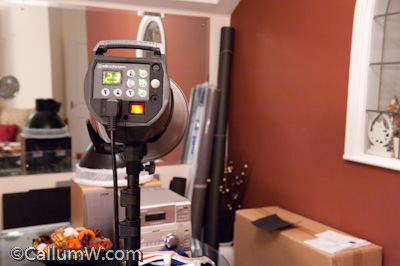
Ambient. 1/13 @ f/7.1 @ ISO6400
I hook up an Elinchrom Skyport trigger as the BXRi has a built in receiver.
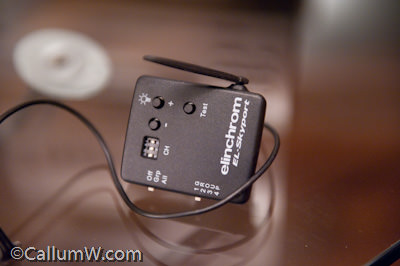
Ambient. 1/40 @ f/3.2 @ ISO6400
Pow!!! These things kick out some light…
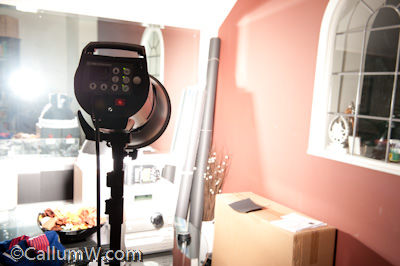
Wireless Skyport. 1/200 @ f/8 @ ISO400
Switch off the Skyport and set the camera to a ‘flash’ setting and take a shot to show that no ambient is showing

Ambient. 1/250 @ f/11 @ ISO400
Switch the Skyport back on and … Half decent exposure. Notice the bottom edge of the frame is a bit dark. Looks like the Skyport/Elinchrom combination is not quite 1/250s which is a surprise. 1/200s will be fine though
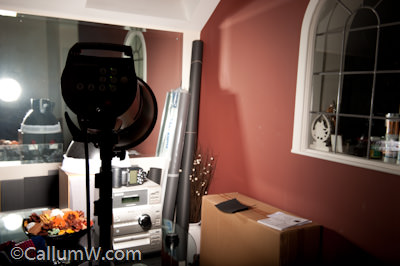
Wireless Skyport. 1/250 @ f/11 @ ISO200
Increase the shutter speed to 1/400 and there’s the typical sign that we’ve exceeded the sync speed
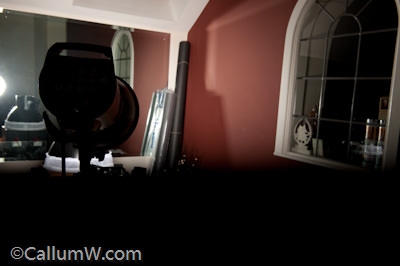
Wireless Skyport. 1/400 @ f/11 @ ISO200
So lets try a PC Sync cable to see if that’s better
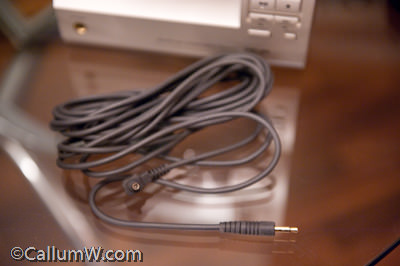
Ambient. 1/40 @ f/2.8 @ ISO6400
Looks fine at 1/200s. Let’s up it to 1/250s to see if we get the dark area at the base of the frame again
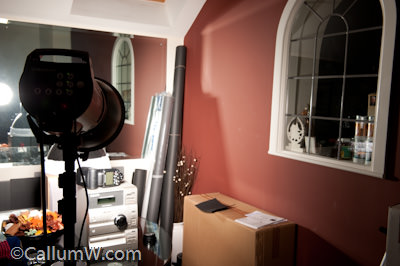
Sync Cable. 1/200 @ f/11 @ ISO200
….. Nope – it looks fine. The wire connection is fine at 1/250s. The wireless must be a bit sluggish
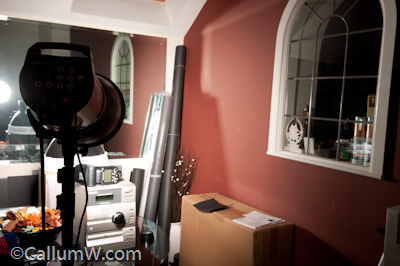
Sync Cable. 1/250 @ f/11 @ ISO200
Bump it to 1/400s and there’s the clipping of the frame again. Interesting that it’s much lower than using the Wireless trigger due to the immediacy of the hard wire connection
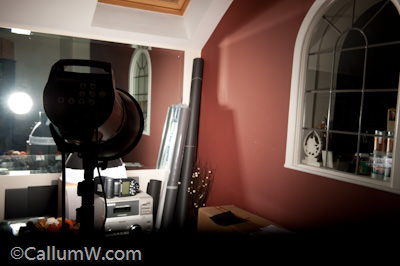
Sync Cable. 1/400 @ f/11 @ ISO200
Time to try the speedlight. Ignore the settings in this picture
It was actually set to [TTL][BL][FP] for the next shots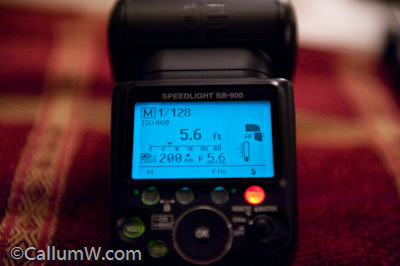
Ambient. 1/160 @ f/2.8 @ ISO6400
Ambient shot at much lower settings. The speedlights pack a much lower punch so need to adjust down accordingly
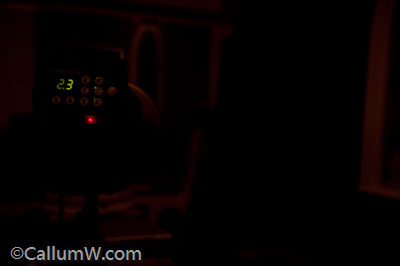
Ambient. 1/200 @ f/2.8 @ ISO400
Flash switched on and ….. not too bad
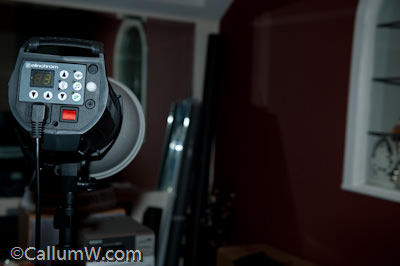
SB900 TTL FP. 1/200 @ f/4 @ ISO200
1/250s is showing clean edge to edge illumination
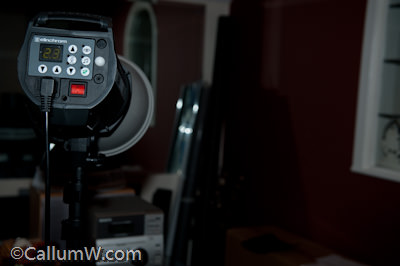
SB900 TTL FP. 1/250 @ f/4 @ ISO200
Ramped it up to 1/800 and it’s still lit fine, but notice the slight warmer colour shift
SB900 TTL FP. 1/800 @ f/4 @ ISO200
Ramp it up to 1/4000s and it’s still popping away quite happily
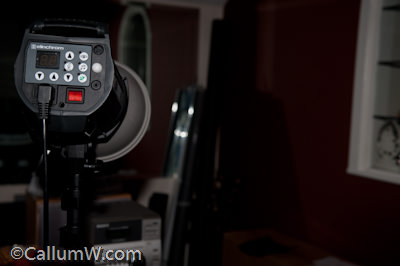
SB900 TTL FP. 1/4000 @ f/4 @ ISO200
I now set the SB900 to manual and it’s lowest setting (1/128) as per the picture 6 up from here. It actually shows [M] [FP] to indicate that it’s in high-speed-sync mode.
The Flash hardly does anything to the image, but will easily trigger the BXRi optical slave….
SB900 M FP 1/128 power. D700 1/4000 @ f/4 @ ISO200
Set the optical slave on and ….. hey presto. Clean image at 1/250s
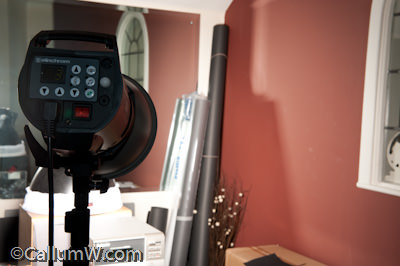
SB900 M FP 1/128 power. D700 1/250 @ f/11 @ ISO200
Bump it up to 1/800 and, although it’s darker in the top of the frame, the bottom section is lit.
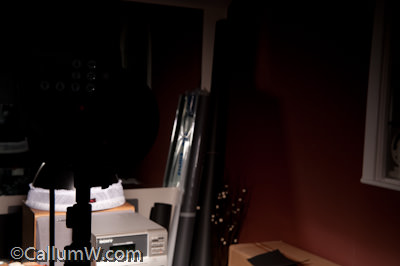
SB900 M FP 1/128 power. D700 1/800 @ f/11 @ ISO200
Increase to 1/2000s and it’s still lighting it. Bare n mind this is the BXRi at minimum powerand the camera settings are 2 stops darker than when using the AutoFP with the SB900
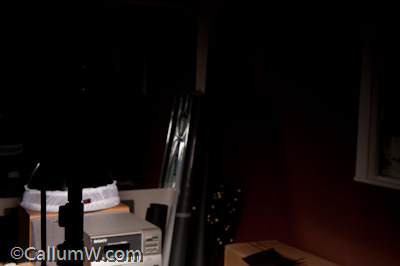
SB900 M FP 1/128 power. D700 1/2000 @ f/11 @ ISO200
Increase the F stop to F4 rather than power up the strobe head
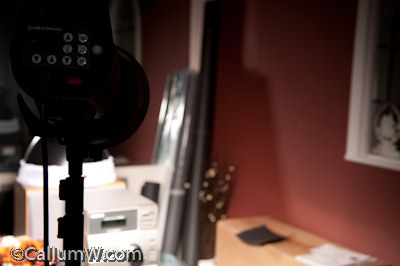
SB900 M FP 1/128 power. D700 1/2000 @ f/4 @ ISO200
Hardly any change when increasing it to 1/4000s
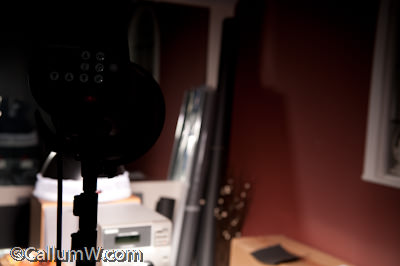
SB900 M FP 1/128 power. D700 1/4000 @ f/4 @ ISO200
And again virtually no change even though the camera is firing at 1/8000s
…. yes 1/8000s sync with a studio light 
SB900 M FP 1/128 power. D700 1/8000 @ f/4 @ ISO400
So there you have it. The easy way to perform maximum sync speeds on your camera and still be able to use studio lighting to light your subject.
Any comments, please add them below 🙂Nikon D3S – Hands on Review
I’ve been reading some great reviews about the new Nikon D3S released October 2009 and I’m in the market for a new camera, so I went to my local Jessops have a looksee.
The last camera I had a look at was Nikon’s 25mp D3X which I was unimpressed with due to the amount of noise in the resulting files. No-one mentioned that when the D3X was reviewed (unless I was testing a ‘Friday’ Camera(?)), so I approached the D3S with some trepidation.
I performed the test in exactly the same why as I did with the D3X and the D700. I set up the D3S to the same settings I have on my D700 although I may have left the D3S in matrix metering rather than center weighted (it was capturing images about 2/3 stop brighter than my D700).
Both camera set to RAW (is there any other format?) and lossless compression. I tested the cameras using my 14-24 @ 14mm ,24-70mm @ 24mm and 70-200mm @ 70mm
The main reason behind this was to see how the camera handled potential vignetting at each lens’ widest focal range.
I set the camera to aperture priority @ f/4 and ran them through the ISO range from Lo1 (ISO100) to HI3 (102,400)I ran off the initial shots with the D700 then switched to the D3S
My first impression when I put it to my eye was how quiet it was. I’m used to the loud clatter of the D700/D3 shutter, but this was much more muted – similar to sound of the Canon 5dMkII.
1st image off so I checked the back of the camera to make sure I was exposing correctly and the second thing struck me …. 100% viewfinderBefore I got the D700 I convinced myself that 95% was ok and I just have to compensate to frame accordingly. But it’s been the one thing that’s driven me semi-nuts about the D700 . Lovely camera and a real performer, but every shot needs to be re-adjusted. Becomes a nagging thorn over time.
But now with the D3S we get Dust removal, 35mm sensor and 100% viewfinder coverage – Glorious
So I carried on with the test and left the shop with a wave and the shop’s number in my pocket. Back home to load up the files and after a quick upgrade to Lightroom 2.6, in they come.
The results are …… astonishing.
With High ISO NR off and Long Exposure NR off, the D3S created files at ISO6400 that are equal if not slightly better than the D700 at ISO1600. I expected it to be good, but it still caught me a little by surprise.At 200%, you can see the images Have a slightly ‘botox’ plasticky feel to them which doesn’t seem to hold as much contrast or sharpness as the D700, but the overall result when viewed normally is nothing short of amazing.
Below is a sample @ 200% of the D3S at ISO 6400 and the D700 @ 1600


Here are the full sized images:

Do I want one, hell yes, but at £4200 RRP for the camera it’s too steep. I shopped around and found a best price, so called the guy back in Jessops. He was unable to match the proce and so unfortunately I didn’t pick it up from them.
In fact – as much as I like it, I’m not getting one(!)The reason is simple, as with the D3, the D700 followed about 6 months later as being basically the same camera, but in a smaller body and 2/3 the price.
This is still silly expensive, but for me more than just the cost. One of the reasons I like the D700 over the D3 is because I put my grip on the D700 and I have the full size camera, but if I want to travel lighter or a bit more incognito then I remove the grip and I become just another ‘tourist’
Unofficially …. the D700S is out in March – I can wait ’till then Contrary to the roumour mills – it will be the same 12.1Mp sensor and 720p HD video, not 16 or 18Mp and 1080p HD video (why would anyone bother with the D3S if it was a better spec?)
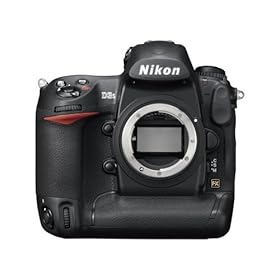
So until March ……In case you want one now, here’s a link to the D3S in Amazon:
My picture of RAF Museum, Cosford is in Schmap
I was contacted recently by the Schmap team when they requested use of a picture I took of RAF Cosford to be included in their online mapping system

Schmap are a mapping service like Google maps, only Google maps focus more on their road mapping technology with the occasional user supplied picture.
Schmap on the other hand are more of a classic mapping service like Streetmap, only they actively seek decent photographs of surrounding areas so people can see what’s nearby in every location possible.With that, I was contacted by them for one of my pictures to be added into their 9th edition.
The picture I took was from my recent trip to Cosford for the BIPP annual conference. I was a bit surprised they used the picture they did as I had some other ones that I thought were much better/more interesting, but the client often has their own preference.
If you get the chance to visit the RAF museum in Cosford then it is worth the trip. Lots of memorabilia housed in it’s
Here’s a direct link to Schmap so you can see it’s features: https://www.schmap.com/
To see my image on an iPhone in schmap, click here:
To visit the series of images I took at RAF Cosford, click here: CallumW BlogPageGreenwood Racing Landrover
Was out on Saturday 27th getting my car serviced at Greenwood Racing when James, the owner, asked if I would take some shots of his car (the ‘pimp wagon’ 🙂 )
I was happy to oblige and below’s a sample of what I sent over to him today.

It wasn’t an easy shot to get as it was a bright afternoon plus there was a lot of clutter around the car (cones, bins etc). I found a better location for the car by a large gravel mound, but James was too tired after a day of playing with his spanners to move the car.
So I had to do the best I could where it was.
I used a couple of bare speedlights I had in the bag in order to separate the car from the background, plus and a little bit of photoshop magic and hey presto 🙂
