How to: Be a Photographer
Digital Tampering – a possible solution?

Should we allow images used in media to be extensively edited?
From my perspective, absolutely.Creating a perfect image is a key element to making a product or service desirable.
Can it cause problems in society where being constantly subject to seeing these images can affect our perceptions?
Undoubtedly.
In the same way that a percentage of the population are more susceptible to hypnotism or subliminal messaging, we will all be influenced at some level by what we see every day.Should we put disclaimers on images that are edited in magazines, billboards etc….?
Yes, I believe that we should have a something on the images so we know they’ve been retouched.
How can we find a middle ground that doesn’t have ugly distracting banners taking a percentage of the image in the same way cigarette packets have the warning labels on them …. which don’t work. I know friends that bought skull&crossbone cigarettes because they were perceived to be more dangerous (go figure)
I thought of a possible solution:
Rather than obscuring a part of the image with a white warning box, why not put small colour (or greyscale) circles/squares subtly in the corner of the image or page which relates to the editing work that was carried out.It could be ISO standardised so that it’s the same for everyone to use, or alternatively each magazine could have their own key chart shown in the bottom of the MastHead.
For example:
Blue: Colour change (e.g. eyes, clothes, skin)
Red: Blemish Removal
Green: Texture alterations
Yellow: Shape changing (Liquefy/Stretch/Shrink, bigger eyelashes, narrower thighs etc..)
Grey: Added extra elements (CGI, blending other images)Here’s a rough example of how it could look.

Everyone should be happy 🙂
Advertisers keep their perfect images and consumers subconsciously know it’s been enhanced away from reality.So, what’s your opinion on how images should be shown in the media? Edited or warts ‘n all? 🙂
Wildlife on London’s Doorstep

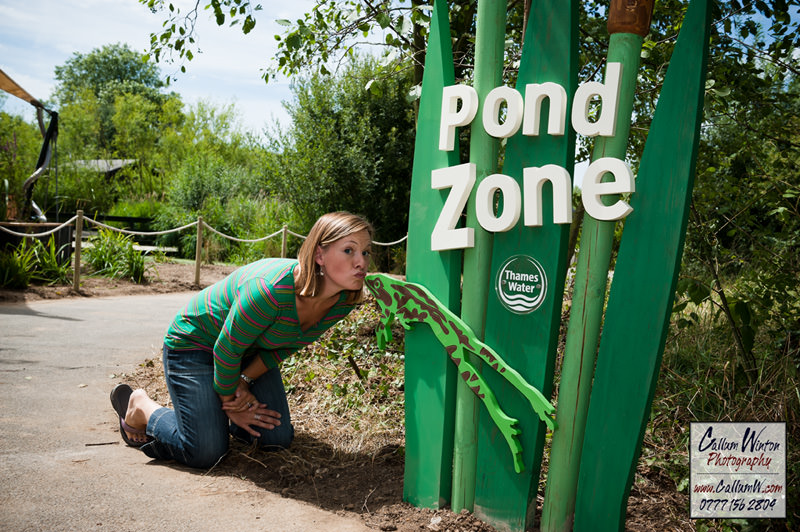
Not much happening at the moment so I thought I’d blog about some commercial photography I did for the Wildfowl & Wetlands Trust (WWT) in mid-July when they were opening a couple of new Hi-Tech Ponds sponsored by Thames Water to add to their park experience.
The 42 hectare London Wetland Centre in Barnes (London) is regarded as the best urban wildlife site in Europe and, as I’d never been before, it was something I was looking forward to.
When the day came it was a scorcher.
The temperature was hovering around 28-30 Celsius which wasn’t ideal when I was carrying around 10kg of equipment on my back and 3kg in my hands, but the scenery in the hot summer sun was stunning.My task was to photograph the opening of the new Interactive Digital Pond as well as their Pond Safari, a remote-controlled underwater camera pond (that water was looking very tempting in that heat).
They were opened by TV wildlife presenter Miranda Krestovnikoff who was great to work with and sharing her love for wildlife with the kids.Following the 2 unveilings I was to take some general scenery images for the WWT to put in their image library which would be used for future advertising, poster, banners etc.
My contact for the day was the very knowledgeable Jamie Wyver and we walked around the park with Jamie showing me the areas of the park which he wanted photographed. We made an efficient team with him getting disclaimer signatures from parents and me getting the shots of the landscape.
At the end of the day the images were given to the WWT to put into their image library for press releases and to Thames Water for their own press releases.
It was a longer day than I expected, but the park was such an amazing place to visit and the time flew by.
Who knew such a jewel sits virtually in the middle of London?
More pics below:


Why you should hire a photographer for your marketing material
I’ve seen a run of articles recently which re-enforce the value of working with a photographer to create an image and marketing material that’s right for you, rather than purchasing stock images, regardless of them being Rights Free (RF) or Rights Managed (RM).
What’s the difference between RF and RM?
Simply put, Rights Free means anyone can buy and use the same image concurrently. You could be sharing the same image for your Children’s Nursery service as another company selling Bondage Gear. You have zero control over it’s use.Rights Managed usually means that you license the image for a specific use + time so that the same image may not be used in the same arena or publications during your purchased license term (the more it costs, the more exclusivity you have).
This gives you some control of who else uses that particular image, but there’s nothing stopping an almost identical image from the same set being used elsewhere as you only licensed one shot.So … here are some examples of what happens when people try to save a few bucks on their overheads.
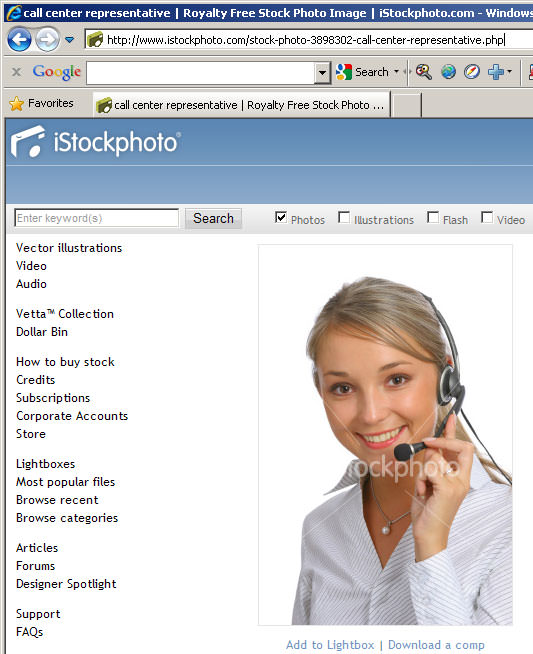
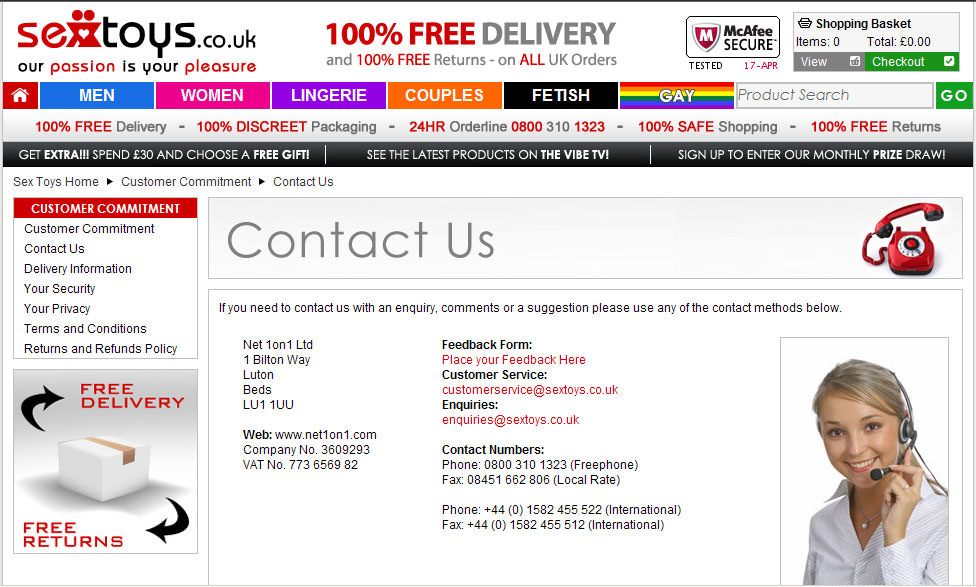
An example image of a call center person on a stock website
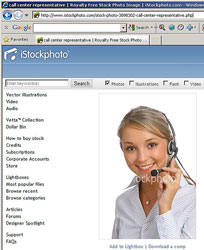
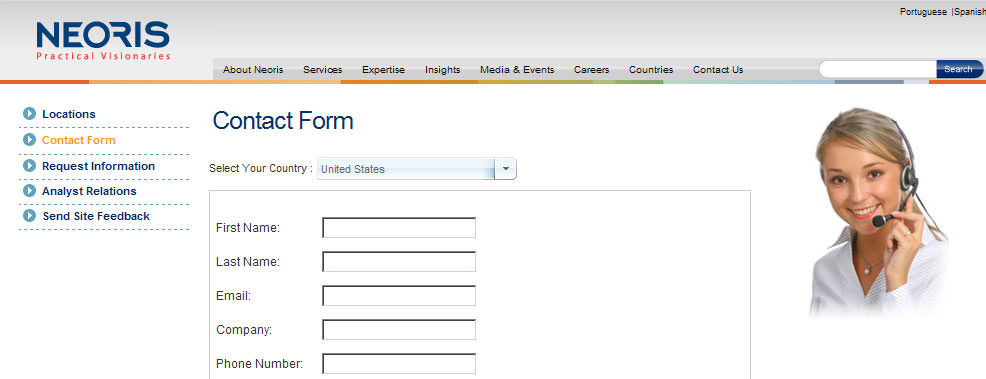
The same girl on the website of "a global business and IT consulting firm"

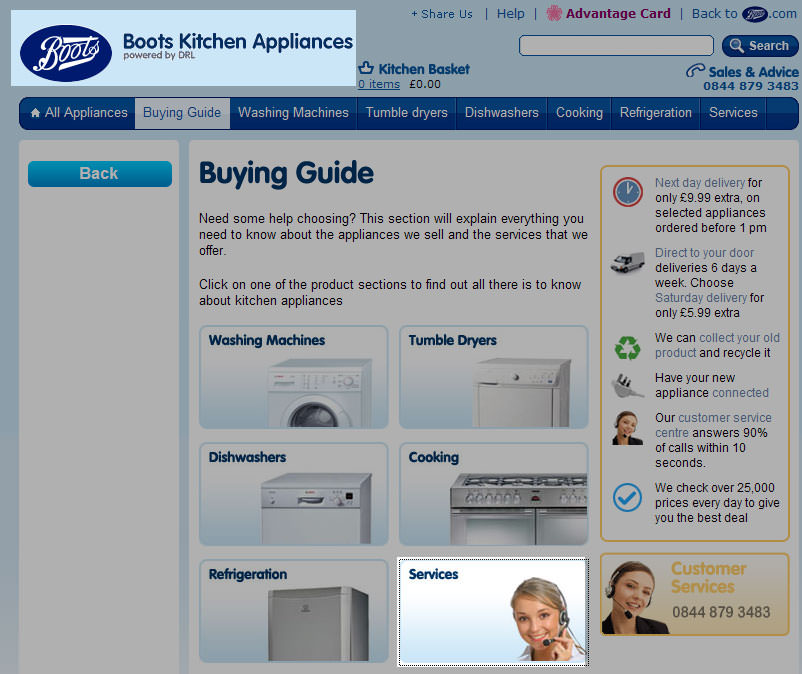
The same girl on a major UK Brand website:
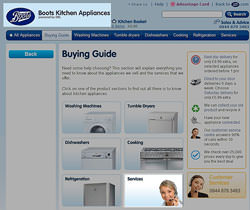
And … oh dear! The same girl on an adult toy website
(clicking in this image reveals a clear image):
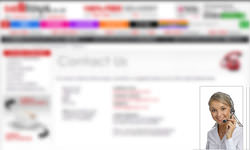
The above are examples of website use only, but it also extends to print too.
The next example was found and shared on the blog of BobballsBillboard Poster from The Democratic Unionist Party (DUP)
"The larger of the two main unionist political parties in Northern Ireland" (Wikipedia)
Within hours, someone from a rival party found the stock image source and used another image from the same set to completely discredit the DUP – and there’s nothing they could do about it …
(except work with a photographer in the first place)

While we may laugh at the above, the actual implications of these "shortcuts" for these companies, designers (and political parties) are extremely severe and embarrassing, not to mention potentially costing them revenue or credibility should both marketing campaigns be effective in the public eye.
The reality is that if you work with a photographer to make one picture, then yes this is going to cost more than a generic stock image.
But if you work with the photographer to make a series of images for you then it works out cheaper than stock pictures.So the question is .. is your public image only worth £2?